Nijo Castle: A JOTM Guide
In the quiet heart of Kyoto, where old streets hold their breath behind layered moats and solemn stone, Nijo Castle (二条城) waits, not in conquest, but in echoes. This is not just a destination, but a listening place. Step through the gates of Nijo Palace, and the past begins to speak: the creak of the nightingale floors, the hush of shoji screens, the pause between sliding doors. At the center lies the Ninomaru Palace, where power moved not in declarations, but in glances and quiet ceremony. Few places hold history so softly. Few locations, like the Nijo Castle location, reveal so much by sound alone.
Select links in this guide are affiliate links. They help sustain this space… allowing us to share more, with less dependence on advertising.
*Prices are subject to change.
Before you cross the threshold of Nijo’s quiet halls, wander Kyoto’s storied streets, where history drifts in shadows and shifting light.
Discover Kyoto
Nijo Castle at a Glance: Overview & Quick Facts
- Region: Kansai (Kyoto Prefecture)
- Nearest City: Kyoto
- Type of Site: Castle (Historic Site, Edo Period)
- Best Season to Visit:
- Spring (late March to mid-April): Plum and cherry blossoms bloom in quiet corners of the garden.
- Summer (June to August): Warm, dappled light over wooden halls and still ponds.
- Autumn (late October to early December): Fiery maple leaves mirror in reflective moats.
- Winter (January to February): Sparse visitors, muted light, and a rare sense of stillness.
Our Best Time to Visit Japan guide expands on Kyoto’s seasonal stillness, and where else across Japan you’ll feel the rhythm shift.
Why It’s Special in One Sentence
Nijo Castle is a fortress built for listening, a place where every step sings of strategy, stillness, and the elegant restraint of power.
Why Nijo Castle Is Worth Discovering: Highlights of Kyoto’s Historic Shogunate Site
- Built in 1603 by Tokugawa Ieyasu, Nijo Castle was never meant for war, but for presence, its strength lay in the weight of its silence and the symbolism of the shogun arriving in Kyoto.
- The castle’s famous uguisubari, or “nightingale floors,” were ingeniously designed to sing underfoot, alerting residents to every step with soft, deliberate sound.
- Inside Ninomaru Palace, gold-leaf wall paintings of tigers and pine evoke both nature and authority, designed to impress, intimidate, and display the grandeur of the Tokugawa regime.
- The structure reflects a rare duality, its thick walls and guarded gates offer security, while its gardens and interiors reveal a world of refined elegance and quiet control.
- Nijo Castle’s outer gardens unfold with seasonal grace, where shaped stones and sweeping ponds mirror the harmony and intentionality found in the palace chambers.
- Between the audience halls and the inner sanctums lies a threshold, not just architectural, but symbolic, where the shifting balance of imperial and military power once played out in subtle formality.
Must-See Wonders at Nijo Castle: Ninomaru Palace, Nightingale Floors & Moats
Ninomaru Palace
- As you pass through low wooden corridors, every room feels layered with hierarchy, carefully ordered, carefully watched.
- Painted fusuma doors reveal scenes of tigers, cranes, and pine, designed not only for beauty but to remind visitors of nature’s strength and the shogun’s dominion.
- The palace unfolds slowly, each chamber more intimate than the last, guiding you through power’s quiet choreography.
The Nightingale Floors
- Beneath each step, the uguisubari floors chirp like birds at dusk, a sound once meant to expose intruders, now echoing centuries of watchfulness.
- The melody isn’t loud, but it lingers, a rustle of wood and time that reminds you even silence had a system.
- Walking here is less about moving forward and more about becoming aware of how you move.
Ninomaru Garden
- Designed with deliberate asymmetry, the garden’s rocks, trees, and pond form a moment of balance, stilled, yet always changing with the light.
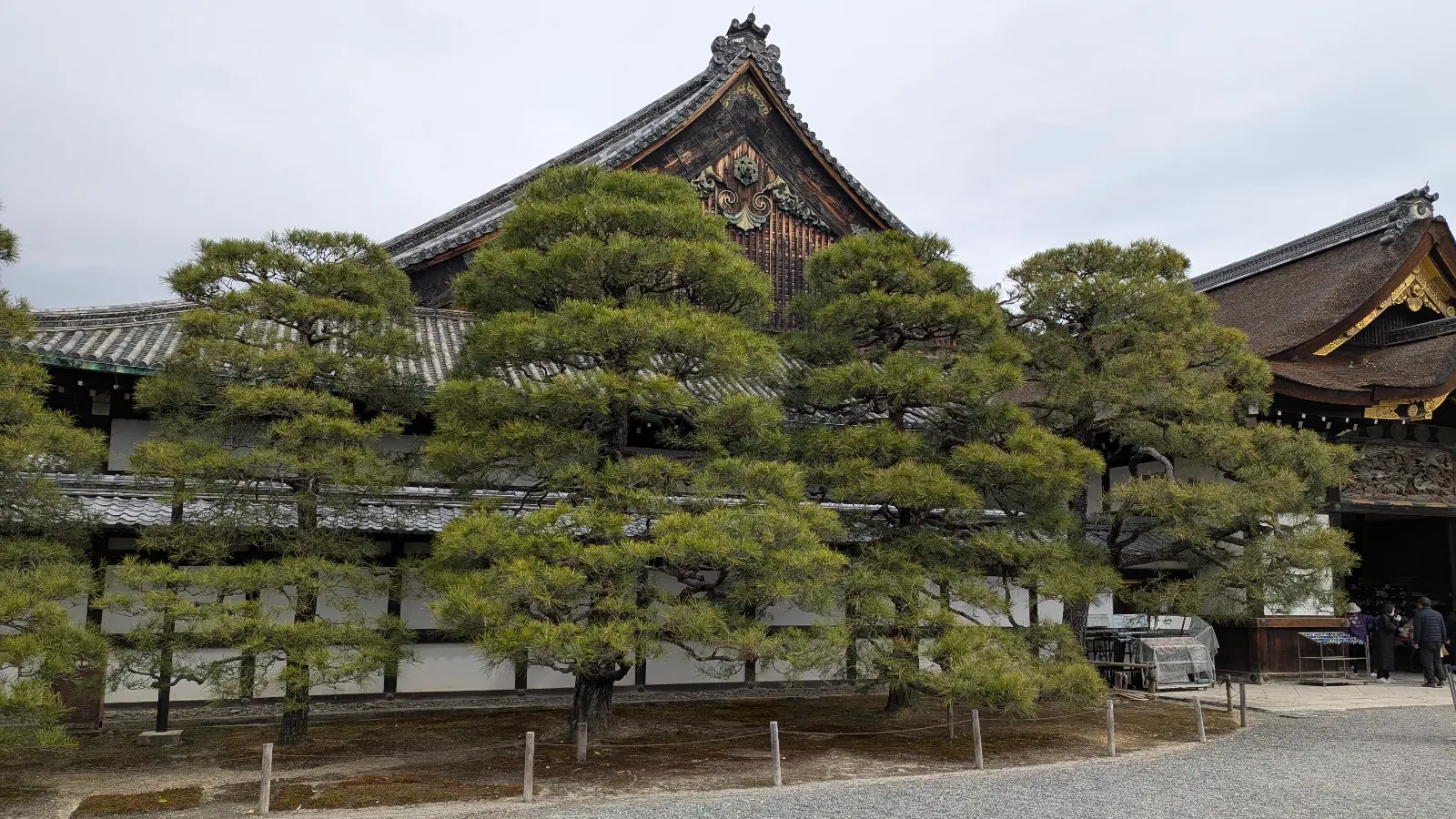
- Refined by Kobori Enshū, it’s a landscape of controlled wildness, where moss softens stone and pines stretch toward history.
- The still surface of the water reflects more than trees, it reflects the quiet precision that defines the entire castle.
The Inner Moat and Honmaru
- Few visitors wander this far, which makes the walk feel like discovering a hidden memory inside Kyoto itself.
- Encircled by its own moat, the Honmaru area once guarded the most protected spaces, a castle within the castle, held back for necessity, not show.
- Though its original tower no longer stands, the reconstructed keep offers stillness and sweeping views across layered rooftops and city beyond.
Local Secrets from JOTM: Hidden Tips for Visiting Nijo Castle
- Let the Floor Sing Alone: Visit near opening (8:45 AM) and walk Ninomaru’s paths before the tour groups arrive. The silence makes the nightingale floors even more resonant.
- Find the Plum Path: In early spring, detour toward the plum orchard near the outer wall. The blossoms bloom ahead of cherry season, delicate and fragrant.
- Wait for the Turn of Autumn: Mid to late November sees the maples along the moat ignite in crimson, a sight many skip in favor of temples, but unforgettable here in castle stillness.
- Stand Between Doors: Inside Ninomaru, pause in the threshold between chambers. Imagine what it meant to wait there, not quite inside, not yet summoned.
- Honor the View From Afar: The exterior angles of the Honmaru walls, seen from the bridge near the East Gate, offer the most cinematic view, stone, water, sky, and symmetry.
Nearby Sacred Spaces: Temples & Walks Near Nijo Castle You Shouldn’t Miss
- Kyoto Gyoen National Garden – just a 15-minute walk away, offering gravel paths, open lawns, and the quiet expanse of the former imperial palace grounds.
- Shinsen-en Garden – located 10 minutes on foot from the castle, holds Kyoto’s oldest garden pond, once tied to Nijo Castle and still echoing with legends of dragons and ritual.
- Mibu-dera Temple – about 20 minutes away, is steeped in the spirit of the Shinsengumi, the loyalist warriors who once defended Kyoto’s shifting future.
- Rokkaku-do Temple – a 15-minute stroll east, offers a hexagonal hall, quiet incense, and ties to both ikebana traditions and early Buddhist practice in Kyoto.
Getting to Nijo Castle: How to Access the Site by Foot, Bus, or Train
- By Bus: From Kyoto Station, take Kyoto City Bus 9 or 50 to Nijojo-mae. The entrance is directly in front.
- By Train: Nijojo-mae Station (Tozai Line) is a 2-minute walk. Alternatively, Nijo Station (JR San’in Line) is a 15-minute walk.
- Kyoto is easily reached with the Japan Rail Pass, including fast transfers from Tokyo or Osaka.
- By Foot: A 30–40 minute walk from Gion or Kawaramachi takes you through quieter Kyoto streets and is especially beautiful in autumn.
- Hours: 8:45 AM to 5:00 PM (last entry 4:00 PM). Closed on select Tuesdays and major holidays.
- Cost: ¥1,300 for entrance to both Ninomaru Palace and Honmaru area
For a smoother journey across Kyoto’s layered districts, our How to Get Around Japan guide offers clarity on routes, passes, and walking rhythms.
Resting Nearby: Hotels Near Nijo Castle
- Nazuna Kyoto Nijo-jo – A restored machiya where tatami rooms, inner gardens, and quiet tea rituals unfold just steps from the castle.
- THE JUNEI HOTEL Kyoto – Minimalist and serene, with hinoki baths and soft design details that reflect Kyoto’s refined stillness.
- Villa Sanjo Muromachi KYOTO – Elegant and intimate, this villa-style retreat pairs warm textures with quiet comfort in the heart of the city.
- Garrya Nijo Castle Kyoto – Modern and meditative, this design-led retreat blends natural textures and soft light just across from the castle’s quiet walls.
- HOTEL THE MITSUI KYOTO – A flagship of refined luxury, where garden courtyards, private onsen, and heritage architecture unfold in harmony beside Nijo Castle.
From a townhome wrapped in tradition to a garden-view suite, our curated Kyoto stays invite you to linger where echoes of the shogun and stillness meet.
Stay in Kyoto
FAQs and Travel Tips about Nijo Castle: A Few Last Things Before You Go
If you’re planning your own visit to Nijo Castle, here are some of the most common questions travelers ask, from palace hours and ticket costs to when this historic stronghold feels most alive beneath its whispering floors.
A: Admission is ¥1,300 for full access to the Ninomaru Palace and Honmaru gardens. Junior high & high school students: ¥400; elementary age and younger: ¥300.
A: The castle is open from 8:45 AM to 5:00 PM, with last admission at 4:00 PM. Closed on select Tuesdays and major holidays.
A: The best times to visit Nijo Castle are during autumn (late October-November) for vibrant fall foliage and early spring (late February-March) for plum blossoms. These seasons also offer pleasant weather.
A: Plan for 1.5 to 2 hours, or longer if you walk slowly through the halls, linger by the koi-filled ponds, or pause to listen for the chirping of the nightingale floors.
A: Nijo Castle is located in central Kyoto, Japan, directly accessible via a short walk from Nijojo-mae Station on the Tozai subway line.
A: Nijo Castle is famous for its “nightingale floors” (squeaking security floors), its lavishly decorated Ninomaru Palace interiors, and its historical role as a political seat of the Tokugawa shogunate.
A: Yes, tickets can be purchased in advance through the official website and select Kyoto travel platforms. Same-day tickets are also available at the gate.
A: The nightingale floors in Ninomaru Palace are designed to chirp softly as you walk, an elegant security measure that once warned of intruders. Today, they echo history with every step.
A: Yes. Entry is included with full admission. Inside, you’ll walk through ornate corridors, past painted sliding doors and floors that sing beneath your feet.